DANA STIRLING

works
books
About
CV
Updates
Contact

Recent Press
Small Photobook Cult Podcast
Read more →
Beyond the Smile - Interview
Read more →
View Finder Chronicles
Read more →
field projects gallery
Read more →
Vulnerability In Life And Art Podcast
Read more →
thephoblographer.com
Read more →
PCAC Interview
PCAC Interview
Read more →
Foto Cult Italy
Foto Cult Italy
Read more →
Zero Nine Magazine
Zero Nine Magazine
Read more →
Too Tired Project : Finding Light Within the Dark
Read more →
Featured
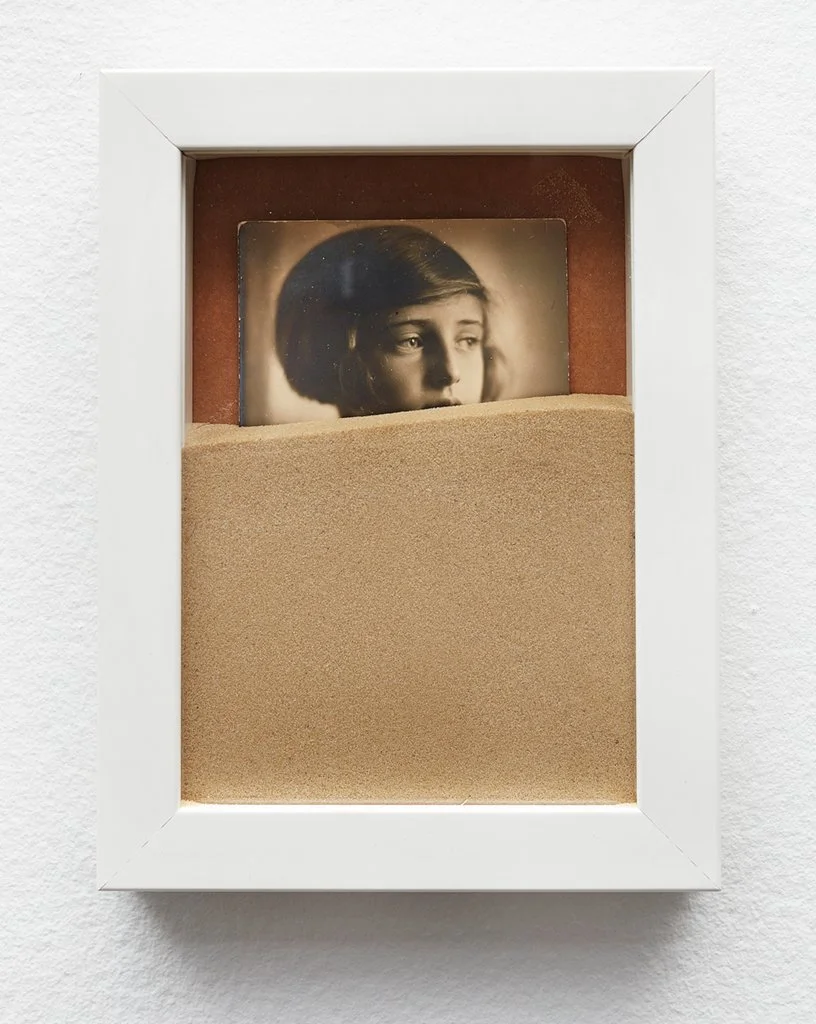
The Couple (Work in Progress)

Back in 2018 I received a collection of images from an estate among other random anonymous imagery. When looking into it, I realized that the people in this group of images were the same couple. With no information, names, locations, or years they are strangers to me.

I’ve been editing, sequencing, and creating photo digital collages from this collection. This method of manipulation allows me to not only re-imagine the story behind these individuals, but in a way survey the way we use photography to read what is true or not. I am reclaiming their story for myself, enhancing what I believe their relationship is.

Are they happy together? Maybe, maybe not. Who are they? What was their lives like? Does it even matter at this point?

With these collages I explore their relationship in a way that I see it. The truth is in the eye of the beholder, that is me. This story is fictional yet rooted in real images and real people who are anonymous.

The white empty space that is created and left around the collage is a big part of the work. This negative space is where I, as the artis, lives. I use it as a tool to isolate the images and create a boundary between what is real and what is fictional.

Read more →
Why am I Sad
Why am I Sad

This in progress body of work is a self-reflection of who I am as a person and my connection to photography. Growing up back in a small town in Israel, I spent most of my time inside my room. I felt alone both outside those walls and inside of them. I was always alone even when I was around others. My house never really felt like a home, and my room was not an escape it was just all I had. Family was not a comfort; it was a cause for much of the stress, anxiety and mainly the sadness I felt.

My mother, even though we didn’t speak about it often, suffers from clinical depression. I saw her lose more and more of herself, becoming less and less a person I understood. When you are young you just think of it as if your mom is just a little sad, so it makes sense that you also are – a little sad sometimes.

It took me years to understand how it really affected me and my own struggles with depression.

As I grew older, and my frustration of the situation grew, I found myself hiding in my room for days, hours and years, buried with my head down in this sand prison. I just felt sad all the time. I felt like there was no escape. Ever.

In this loneliness, I found comfort in photography. With my camera it would be just me in my room and a random object like an eggshell, a figurine, a mirror etc. and I could have it tell my story for me. Photography allowed me to take my inner dialogue and bring it out by using still life as my personal coded language. I was able to communicate with these objects better than people. They told the story I was not able to.

Now, years after moving as far as I could from that room, I find myself still being sad. Photography has become not just an escape but now also my burden. When I don’t photograph, I am sad, and when I do photograph my images are sad as well as if I am no longer able to escape the cloud of sad that is above me. "Why am I Sad?” is my exploration of my personal relationship to photography and the world that I see through my camera’s lens. It is an open question that I don’t intend to answer but I hope that I can find comfort in it once more.

Read more →
Property of the NYPL Picture Collection

The New York Public Library Picture Collection caches over one million original prints, photos, posters, graphics, magazines, illustrations and texts sorted into thousands of binders, each with a specific category and subject. One binder, “UFOs”, claims to hold and archive our cultural interest in the existence of extraterrestrial life. A binder that was composed into this book. Before Google, the Internet and the ‘age of data’ someone at library attempted to collect and archive the entire volume of visual references published in magazines and newspapers that include pictures and drawings depicting aliens and UFOs. It is needless to say that the alleged attempt failed with a finite number of items in the binder scratching 300 pieces.

In total I checked out 121 items. 121 visual references that represent, according to the binder, our collective memory of UFOs, all of which are directly stamped “PROPERTY OF THE NEW YORK PUBLIC LIBRARY PICTURE COLLECTION”. It became clear to me that this stamp was more than just an odd archivist’s decision, and now an integral part of the image and its composition. Even more bizarre is the strategic decision of the different archivists who over the years stamped the images themselves, literarily. Not on the back side, above or to its margins, but directly on the art-work, image, drawing or anything of visual importance. In the act and process of “archiving” they ultimately imposed an alien element—altering the context of these cultural gems.
Read more →
Best With a Dash of Worse

Behind every family album there is a curator. The stories that unfold in them are based not on the pictures that were taken, but ones that were printed and chosen for the album. Those who curate our pasts in pictures hold the key to our perception of history. 

Family albums are not only a documentation of our lives, but embody our alleged collective family memory. The more I looked at images that were not mine, the ones I found and bought at flea markets and were random in place and time, the more I found I was able to devise a memory for them. 

My work process is, in a sense, an abuse of the medium of photography. I adopt abandoned, forgotten and misplaced family moments captured in discarded images, and then willfully appropriate and reclaim them as my own. My photographs represent my search for belonging within a space I create. 

best, with a dash of worse attempts at forming a narrative from parts that do not make the same whole, yet it succeeds at doing so when the reader enables its completion. On recognizing the visual language of a family album, readers call into play the personal vocabulary of their own family pictures, and draw upon the archetypal, collective, family album. It is then that the superimposition of two separate yet interrelated sets of conditions, personal and collective, occurs.

Read more →
Left Missing
Left Missing

The picture on the left, might be missing but also the original albums these black pages came from, the order in which they once were, and the context , the full context, of who are these people, how are they related and where are they coming from. In some way left missing is the left overs of other left overs. For a while now I’ve being collecting found footage, discarded images that once belonged to family archives, and repurpose them giving them a new meaning and a place in my own work. Many of the black album pages are useless in a way if not taken apart and the images used separately. I was discouraged from breaking them apart but also didn’t know exactly what to do with them, so they were left aside. Now that they have accumulated into a critical mass I started seeing how I can insert myself into this very specific, already made, compositions of someone else’s history. The images that didn’t make it through time, fell apart and got lost and are now missing from the black album pages essentially left the door open for me to play off of these partial compositions. Furthermore, the cut out text strips that once made a clear sense in the context of a certain family but now these fragmented pieces of discontinued memories make a new sense in a photo fantasmic context.

Read more →
Mary ; Mary
Mary ; Mary

A couple of years back I received a box and in that box laid tens of color slides. With a quick glance you could see many sunsets, portraits, snow and landscape. All I knew was that this box was taken from the family’s estate and that they were no longer wanted. With that box I got some personal documents of a lady named Mary. I don’t know much about Mary, but I can tell you that she was a good students with all the school report cards I have carrying her name. 
It could be that the photographer was never Mary herself, but does it even matter? Mary is an anonymous figure who has passed these images over to me and they are now in my possession even if that was never her intention. 
Mary is these slides. She is no longer a tangible notion but a photographic visual that groups all these slides together and it is my responsibility to let them be a part of our visual collective. 

After sifting through the images and trying to fine those ‘best’ photos, I came to a cross road when I found the green parrot eating the ice cream. Some might say the decisive moment is of him eating the ice cream – but can we ignore the moment that came before hand? 
This diptych changed that way I looked at Mary’s images. I started seeing them as short clips of time and movement where one slides leads to the other – creating a clear movement of both time, space and the photographer. 
This action allowed me to both create something new from her images, but in some way allow myself to be her eyes at the time of photographing. 

My work process is, in a sense, an abuse of the medium of photography. I adopt abandoned, forgotten and misplaced visual moments captured in discarded images, and then willfully appropriate and reclaim them as my own. The gap between the truth and these images, between the real situation and the initial context and my ownerships of them, and the fact that these images had become detached from the so called “truth” of time and space, allowed me to enter that void, make it my present, and add a new context to it. 

Read more →
Ladies are Roses
Ladies are Roses

Ladies are Roses is a mixed media photographic sculpture that transforms found photos from an abandoned house into a layered narrative of identity and universality. The portraits I selected remain anonymous to me; I have no tangible connection to who these individuals were in their lives or the stories they carried. To obscure their faces, I overlaid them with found 35mm slides of roses, a deliberate choice symbolizing femininity. Roses, to me, embody the essence of women—from their sexuality and allure to their prescribed roles and traditional expectations within society.

By concealing their identities, I made these women both anonymous and universal. They become symbols, transcending the specifics of their individual lives to represent the shared experiences of all women. This act invites the viewer to imagine new narratives for these figures, creating a dialogue between the past and our interpretations of their portraits. In this way, Ladies are Roses becomes a reflection on the delicate interplay between identity, memory, and the power of reinvention.
Read more →
Dear Artist We Regret To Tell You

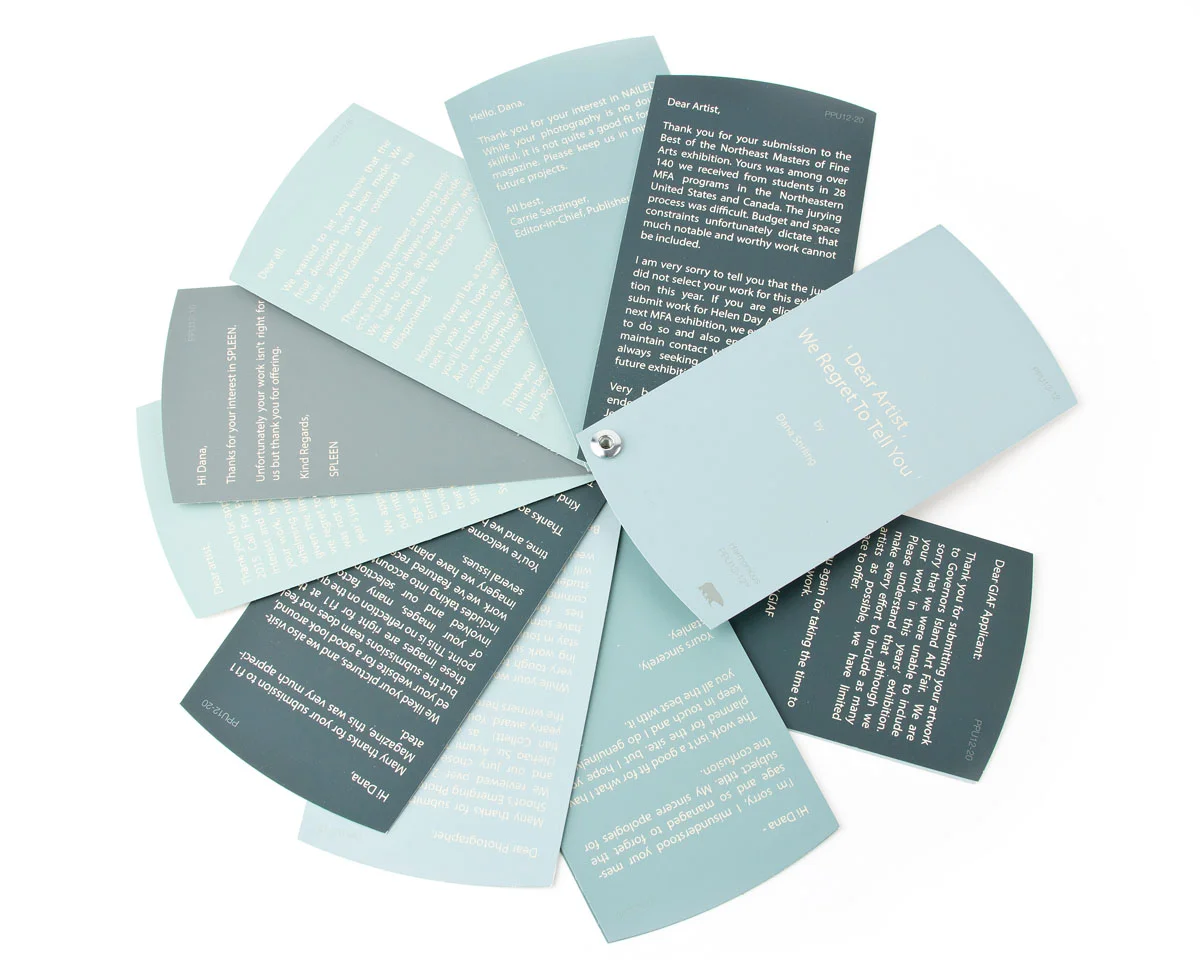
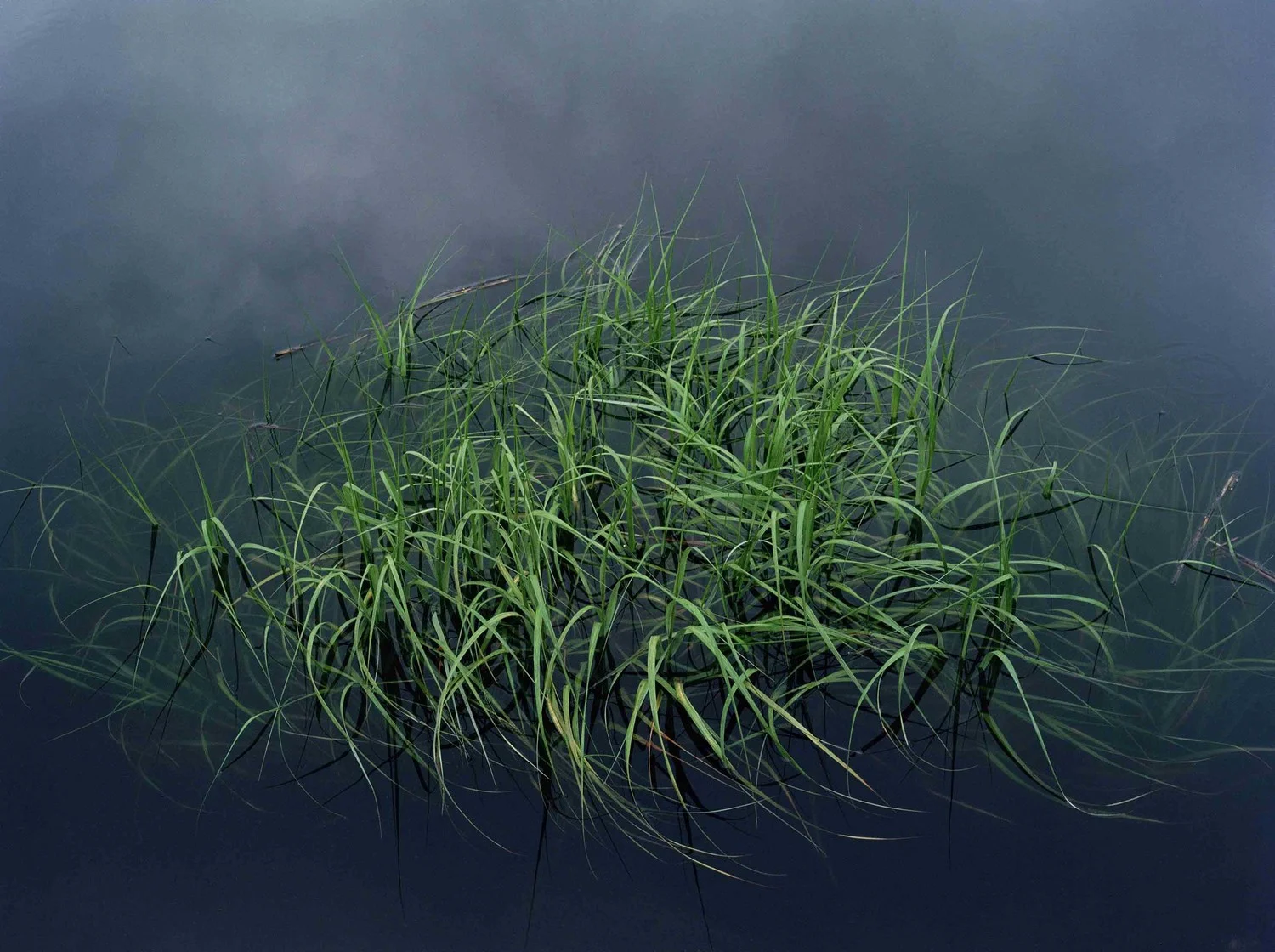
Over the last few years I have been sending my work to different websites, grants, publications, competitions, exhibitions and more. Along side some great opportunities and success I encountered a lot of rejection. After a period of several month of rejection after rejection, I started to doubt myself and my work. I was on the bus, on my way back home. I was thinking about this for few months that were filled with rejections. I was speaking to my husband (Yoav Friedlander, also an artist) about my idea to make something out of all of these rejection letters that I had in my inbox. It started as kind of a joke – about making art out of rejection, and the more I thought about it, the more it made sense to do it. I went and looked back at all the emails I've sent over the years – and started to flag some of the letters. Many letters I couldn't use, as they never responded (which is also a form of rejection , yet not one I could have worked with). What people don't know is that, the book might “only” have 13 letters, but in fact I sent submissions to over 300 places in the last few years. I decided to use wall paint swatch colors from Home Depot, first because they are free and easy to get, but also because they hold so much potential in them- The color swatches are titled with promises, some kind of hidden dreams painted with different shades and unique colors. These rejection letters are all the same, none of them are unique, special or more important. The fan format allows you to look at them in no real order, you see them all at once.The fan allows a flow , a different kind of read. I liked the idea that they are all connected in one place – a small grounded place – what keeps it all together from falling apart I wanted to make something that I could look at and not only be inspired by it, but will make me happy. This book was not made out of anger towards the rejecting places, but more from a place of self-doubt and trying to reclaim my artists passion. After I made it, I sent it, as a replay to the original rejection letter, to all the places I used in my Book – wanting to share this with them, inform them and just to see their reaction. Some places never responded, but the places that did respond loved it and actually thanks me which was crazy by itself. The reaction I got online from people was mostly really amazing.
Read more →
Cache
Cache

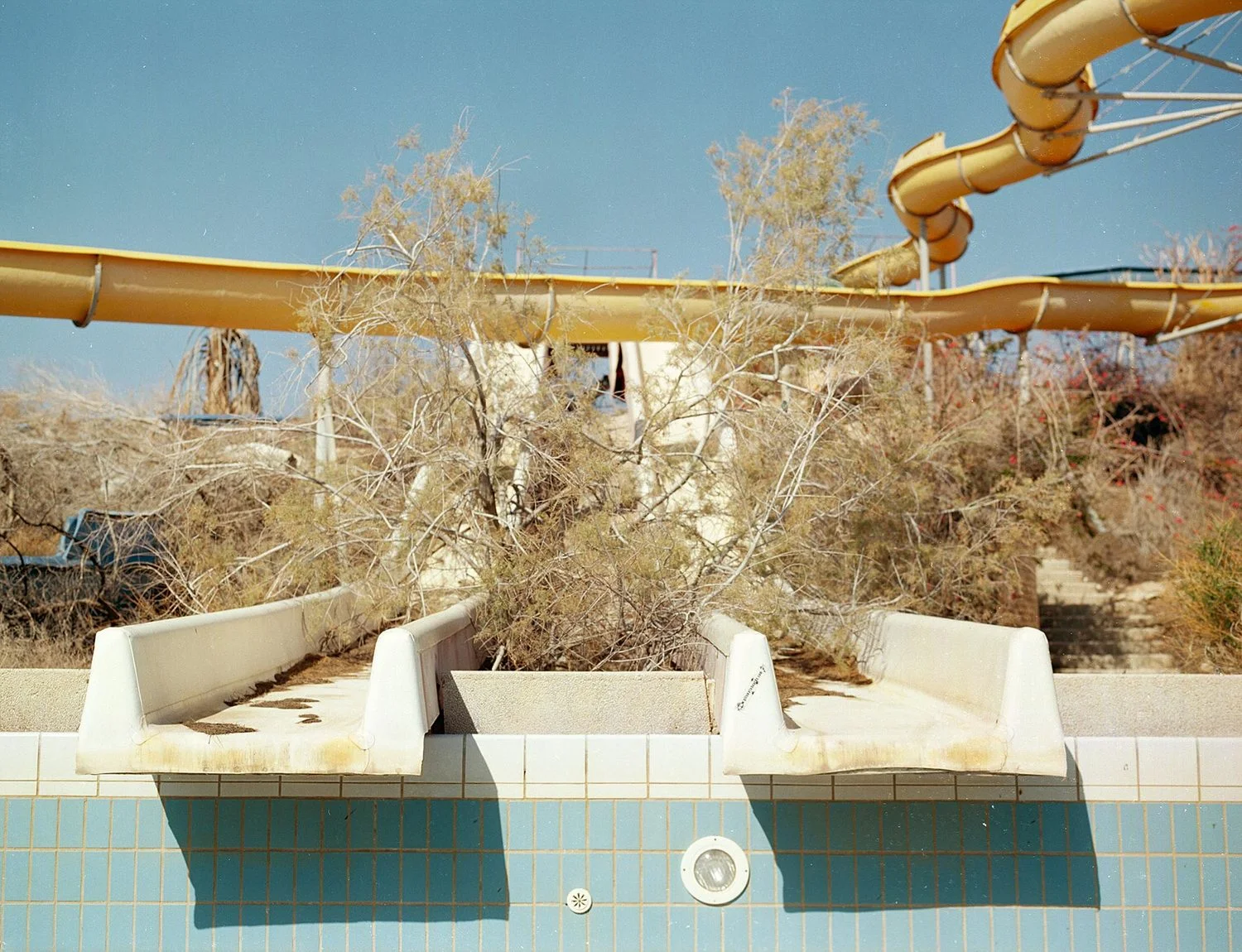
My family roots back to England, but I was born in Israel. I was a child on a fence; a daughter to a migrating family. The house within culturally stayed European but outside was the Israeli controversial culture. I always felt a misfit with my partial incomplete identity; torn apart between parents who have never blended in to the Middle Eastern culture I felt only half belonged too. Over the years I have heard of my parent’s memories and stories. I remember hearing of snow, youth and happiness. Stories of happier days. The stories held on to the memories of time and culture that I wasn’t a part of, and portraits of family members that always remained anonymous to me and their faces where no more distinct than any other person in generic photo album. These stories were supposed to be my heritage. As I grew up I’ve started to question photography’s function as my memory, as my family heritage. My photographic practice chains together straight and still life photography, found footage from my family history and imagery from family albums. Using photography I've conducted an examination of my history. Due to the migration of my family from England to Israel that history discontinued, and therefore I find it hard do consider it as mine. In order to regain my history I’ve appropriated images, along with ones that I have made myself, and edited them into a book titled “cache memory”. The statement that represents the book is the definition of its title – cache memory. The decision to name the book and present it through this definition is handed down as recognition of what is hidden in photographs, coded and read through context; that photographs can unfold memories but not necessarily the same ones that were originally embedded in them. I’m researching a history that I don’t see as actually mine; Family memories that I am not part of. The images become objects that I use in order to create a new history and memory of my own; people and places as I would like to remember and understand them. I started not only looking for my identity in the old photos but also reflect my feelings from these photos on to the world around me. I look for Moments and objects were there is a tension that is created by their incomplete aesthetic. Photography allows me to look at the little and unimportant objects around me and make them a part of my history just by giving them attention. By looking at them I capture them to remember, not letting them go away, yet not trying to save them. Watching their last seconds before I leave and the moment becomes irrelevant, capturing their last breath. With my camera I grant them with eternity and in that I grant myself a memory.
Read more →
Dead Water
Dead Water

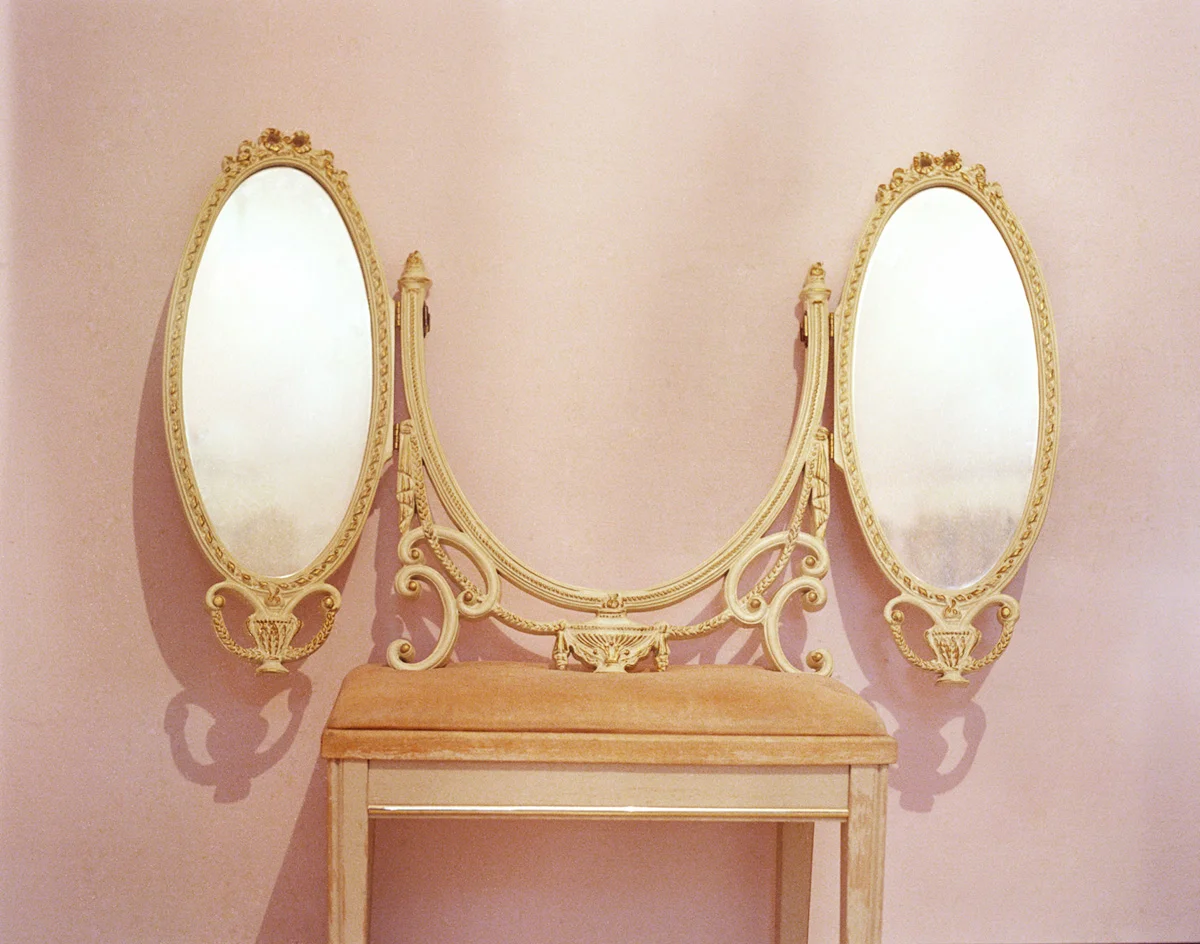
The Dead Sea is a salt lake with no way out. Surrounding this unique lake grew an industry of pleasure, beauty, healing and myth. People come from all over the world to experience the wonder of the Dead Sea. Kibuts Kalia is one of many small cooperative settlements, hotels and resorts, along the sea that have tried to form a haven from the desert’s abyss. Kalia was well known for their water amusement park, the Atraktzia (attraction – word that was borrowed from English), as an oasis of sweet water in the sea of death. Many Israeli’s share memories of Atraktzia as part of their tradition of family vacations and weekends. I have never had the chance of experiencing Kalia’s Atraktzia myself, and yet I grew up knowing of a miraculous fantastic oasis in the middle of nowhere. Years after, In one of my trips down south I had my first encounter with Atraktzia. It was hot, dry and colorless, a pale reflection of its past glory. Te once amazing water park stood empty, abandon and waterless. After doing some research it came to my knowledge that in the year 2000 the water park was shutdown due to the politic tension in the area as well as financial and legal problems. Since then, for 13 years, it stands empty. The stories of others , on which i based my memories , of the place I have never visited , were far from the place I could have now see for myself. And yet, I still feel nostalgic in regards to the fall of the attractions from its glory; not owning even one true memory of Atraktzia haven’t prevented me from yearning its past. As I photographed the park it became smaller, paler and lifeless. In this body of work I do not try to recreate the park, or resurrect it, but document a place that so many people had strong feeling to, as children, and try and understand that glorious period that me myself had never got to experience.
Read more →
Ha’asor 12
Ha’asor 12

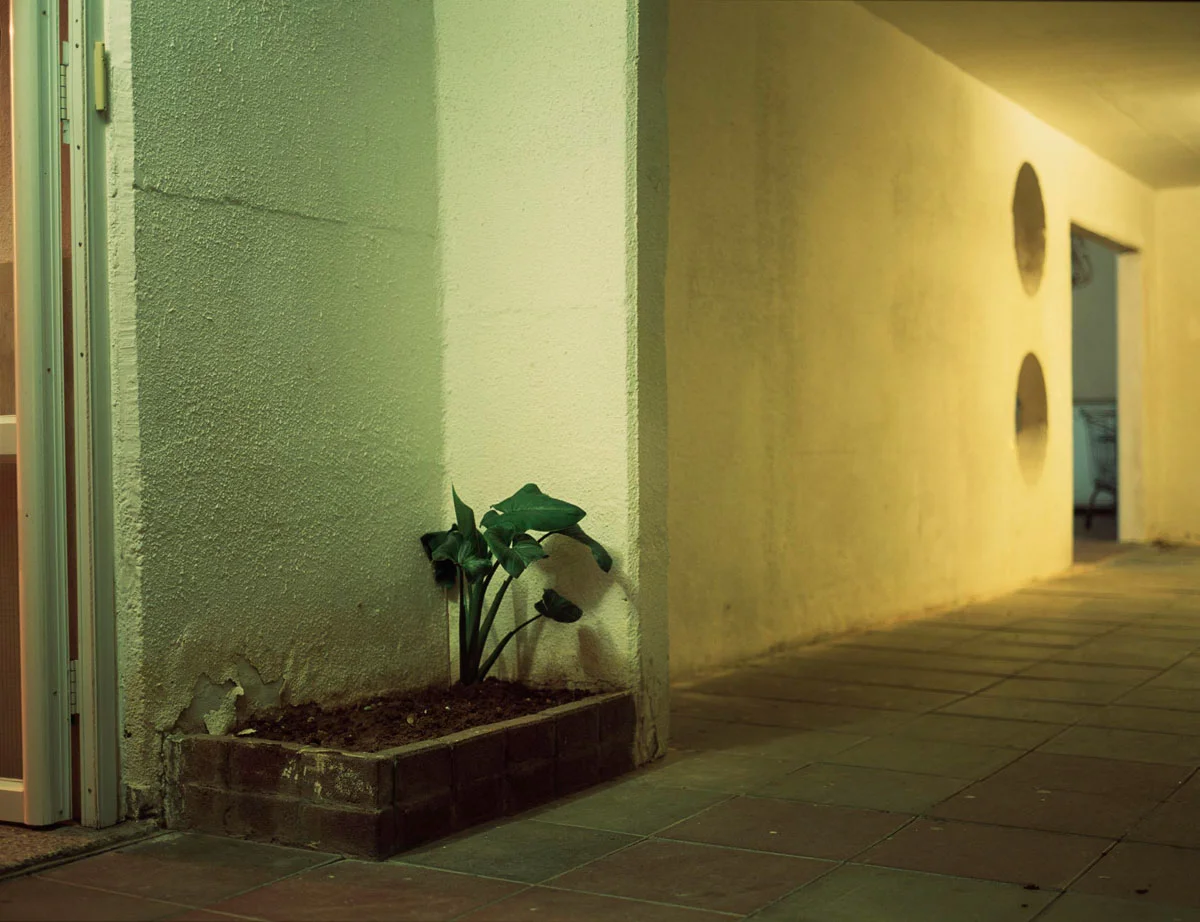
Ha’asor 12 is a documentation of my grandparents’ home. This small apartment has been their home for many years, but after my grandfather passed away my grandmother had to move in with us and therefore the apartment was sold and emptied.

The process was quick, and by the time I was able to get to see the apartment before it was gone most of the items within it were thrown away or taken by family members. The only things left behind were odd items, trash and a few things left to be picked up.

For me, this small apartment was a place of joy, escape and youthful naivety. It was a place where we all gathered once a week to play, to dress up, to put my grandfather’s massive size 12 shoes and my grandmother’s old dresses and jewelry from London. It was a happy place where we ate triangle grilled cheese and latkes. A place where my grandfather drew in pencil animals and we looked at his army tattoo hands. It was a place that we loved before our family drifted away and away. When we seemingly were happy and loved each other.

I was able to document what was left, even if it was insignificant, it was a last chance to capsulate these memories in this tiny apartment in a small city. It was a way to remember my grandfather and his grilled cheese and his size 12 shoes. His spirit was in that home, and it was only a home because of him. We loved him and he loved us and things only changed after he left this apartment.

(Ha’asor 12 is the building they lived in. They lived in a neighborhood dedicated to music instruments that were mentioned in the bible. Ha’asor was one of them.)
Read more →
Color Nights
Color Nights

I walked at night with my camera through my old childhood neighborhood. Although it wasn’t where my home was, it was where my grandparents lived. It is a small neighborhood with old-fashioned Israeli buildings in a desert city of Maal’e Adumim. I call it my childhood neighborhood because I spent many days playing and hiding between these buildings. I came back to the neighborhood as a young adult, looking to find all those memories, but they were long gone. I wasn’t able to remember much and everything felt different from this new perspective. It no longer felt like a large maze but instead it felt small and I could see all the path’s clearly. I only felt comfortable walking around and exploring the place at night, when it was free of people, silent and it was just the streets and I. Than I I was able to reconnect with this place by observing the stillness of the buildings following the light spots around the neighborhood and listening to the crickets. In the loneliness of the the night and it’s emptiness I felt as if I found my memories. There are not specific moments recreated here, but a feeling of home, of a place I understand even if I see it differently now than I did as a child. This place will always be where my Grandfather, Pop, was. He is this light I am looking for, he is my childhood neighborhood.

Read more →
Anonymous Family
Anonymous Family

Family albums have become a standard for people to portrait their family and create a collective memory. We share a need to capture memories and special moments with the people we know. Things as a birthday cake, children taking a bath or a trip to the beach have become a portrait of the normal , typical family memory. Sometimes we don’t even remember the occasion but we relive it by looking at the picture and assuming we remember the memory. I am the third child in my family. Both my brother and sister were born and raised in London. I was born a year after my family moved from their home in London due to an anti-Semitic stone attack on my brothers Hebrew school. My parent’s memories and stories are of England. Over the years I have heard of my family in England. I remember hearing of London in the snow, youth and happiness. Stories of my family. People I never met, people that always remained anonymous and their faces are no more distinct than any other person in a photo album. As for today there are no new photos to fill the pages of my family album, As times have changed .There is no snow here in Jerusalem, the youth is well gone and happiness isn’t a part of the everyday life. I’ve browsed throw these old photos trying to look for a family but all I found was empty spaces. Stories of places I’ve never been to, people I never saw and a period that I haven’t lived in. Those photos were fascinating to me. I have stopped trying to look for my family in the people I don’t recognize or memories in the places I’ve never been to. But instead I started looking for thing that find a way to creep into the photos. Shadows, dents, scratches, and defects. The people have become unimportant. The stories were muted and all I had left was myself. I have started creating a story of my own, a family of my own a portrait of time, people and places as I would like to remember and understand them. This is my anonymous family.

Read more →
Featured
why am I sad book
why am I sad book

Published by Kehrer Verlag | Dimensions: 20 × 24 cm| Hard Cover, Swiss Binding

A photobook by Dana Stirling exploring mental health and depression through still life photography. It’s estimated that almost 280 million people worldwide live with depression. Among this staggering number, this book unveils the personal narrative of just one of them—me. As a child of immigrants, I found myself living in a duality that often left me feeling like an outsider in both worlds. I was a cultural chameleon, navigating the ever-shifting boundaries of identity. Amidst the cacophony of conflicting cultures, there was a profound sense of isolation, a feeling of not quite belonging to either place. Photography emerged as my sanctuary, a medium through which I could articulate the unspoken turmoil within. However, even as my lens captured moments of beauty, the weight of sadness lingered, a constant companion hovering at the edge of every frame. Why Am I Sad is a personal exploration through the shadows of melancholy, unfolded in vivid still life photography that celebrates and challenges the notion of beauty and sadness. I extend an invitation to delve into this narrative—a narrative woven with threads of family legacy of mental health, cultural identity, and the relentless pursuit of self-understanding. Each photograph serves as a mirror reflecting the complexities of human emotion—a testament to the resilience of the human spirit. Behind each photograph lies a story, a silent echo of my mother's struggle with clinical depression—a battle fought in the shadows, unseen yet deeply felt. Her pain became intertwined with my own, shaping the contours of my journey through sadness. Through the lens of my camera, I invite you to join me on this introspective odyssey, where every image is a step closer to understanding the enigma of sadness.

Read more →
why am I sad? zine
why am I sad? zine

Self Published | Dimensions: 10"x7" | Print: Newspaper

This in progress body of work is a self-reflection of who I am as a person and my connection to photography. Growing up back in a small town in Israel, I spent most of my time inside my room. I felt alone both outside those walls and inside of them. I was always alone even when I was around others. My house never really felt like a home, and my room was not an escape it was just all I had. Family was not a comfort; it was a cause for much of the stress, anxiety and mainly the sadness I felt. My mother, even though we didn’t speak about it often, suffers from clinical depression. I saw her lose more and more of herself, becoming less and less a person I understood. When you are young you just think of it as if your mom is just a little sad, so it makes sense that you also are – a little sad sometimes. It took me years to understand how it really affected me and my own struggles with depression. As I grew older, and my frustration of the situation grew, I found myself hiding in my room for days, hours and years, buried with my head down in this sand prison. I just felt sad all the time. I felt like there was no escape. Ever. In this loneliness, I found comfort in photography. With my camera it would be just me in my room and a random object like an eggshell, a figurine, a mirror etc. and I could have it tell my story for me. Photography allowed me to take my inner dialogue and bring it out by using still life as my personal coded language. I was able to communicate with these objects better than people. They told the story I was not able to. Now, years after moving as far as I could from that room, I find myself still being sad. Photography has become not just an escape but now also my burden. When I don’t photograph, I am sad, and when I do photograph my images are sad as well as if I am no longer able to escape the cloud of sad that is above me. "Why am I Sad?” is my exploration of my personal relationship to photography and the world that I see through my camera’s lens. It is an open question that I don’t intend to answer but I hope that I can find comfort in it once more.

Read more →
Best With a Dash of Worse

Hand made | Dimensions: 8"x8.5" | Cover: bare book bord with a projecting Kodak Color Slide inset

While the inception of this project might have been a personal search of identity, it has become, in some sense, a comment on the role photography plays in our lives, its impact on our perception of it, memory & record keeping, nostalgia, loss and happiness. The book is hand bound, self printed and titled best, with a dash of worse. It is organized around three themes, each focusing on one aspect of memories and family albums: home, water and female figures. The book embodies both appropriated images and photographs I’ve taken myself. Some of the found images are scanned and some re-photographed by me in various contexts and environments. Although the book is not following a typological system, the three themes almost make a systematic rhythm, as they repeat in a 5 seemingly specific sequencing order. The method is broken to begin with, yet it still makes sense in the book as a whole. The cover of the book is made of a raw book board. One Kodak color slide is debossed, and flushed onto the front cover. The slide’s content becomes apparent upon lifting the cover, and when light passes through it.

Read more →
Property of the NYPL Picture Collection

Hand made | Dimensions: 8.5" x 11" | Cover: canvas archival pigment print wrap

The New York Public Library Picture Collection caches over one million original prints, photos, posters, graphics, magazines, illustrations and texts sorted into thousands of binders, each with a specific category and subject. One binder, “UFOs”, claims to hold and archive our cultural interest in the existence of extraterrestrial life. A binder that was composed into this book. Property of the NYPL Picture Collection contains over 200 pages. This book was hand crafted and is currently a one of a kind publication with only one copy made to date. The book’s cover is a canvas inkjet print, which was then, used a book cloth. With 14 paper signatures the books holds over 100 images all scanned and than manipulated in Photoshop. The picture collection’s signature stamp has become a crucial graphic and conceptual element within the book’s pages creating juxtaposition between the printed matter and the physicality of the archive. The book does not attempt to make a scientific observation. There was no research done. There has being no attempt in reading the books from which the images were taken, or understand their original and larger framework. The images were used as pictures, and pictures only.

Read more →
Dear Artist, We Regret to Tell You

Hand made | Dimensions: 17 x 8 cm | 'Behr' paint color swatch's in various shades | Laser etched text

Dear Artist, We Regret to Tell you is a book that celebrated rejection and failure as we have all lived through it. I collected 13 [lucky] rejection emails from my inbox each laser etched individually on a color swatch.  The leaser burns off the first layer of the paper, revealing the white under the color. I used Bher color swatches, first because they are free and easy to get, and the secondly because they hold so much potential in them – they are titled in such a way that makes you smile and hope that your life, or at least your room, could be as good as this paint chip claims. In the end, rejection letter have a tendency to be generic, one sided and repetitive, no rejection letter is special which stands in contrast to these color swatches. The fan format allows the viewer to look at the letter as a group or as an individual as there is no real start or end to this publication. Edition of 150 | The book is available for purchase - please send email to get information

Read more →
Cache
Cache

Hand made | Dimensions: 8"x8.5" | Cover: book cloth with front envelope inset sealed with wax

The statement that represents the book is the definition of its title – cache memory. The decision to name the book and present it through this definition is handed down as recognition of what is hidden in photographs, coded and read through context; that photographs can unfold memories but not necessarily the same ones that were originally embedded in them. I’m researching a history that I don’t see as actually mine; Family memories that I am not part of. The images become objects that I use in order to create a new history and memory of my own; people and places as I would like to remember and understand them. I started not only looking for my identity in the old photos but also reflect my feelings from these photos on to the world around me. I look for Moments and objects were there is a tension that is created by their incomplete aesthetic. Photography allows me to look at the little and unimportant objects around me and make them a part of my history just by giving them attention. By looking at them I capture them to remember, not letting them go away, yet not trying to save them. Watching their last seconds before I leave and the moment becomes irrelevant, capturing their last breath. With my camera I grant them with eternity and in that I grant myself a memory. The book cover has an envelope that is sealed with a wax fossil stamp - just like the content of the book there is always something the reader can not open fully even though it is right there for them to see.

Read more →

 
Dana Stirling Fine art photography
0

float green

info icon

info icon thick

grid icon

dana icon

fb

ig

float

fb2

ig2

float2

ig3

No results found
  • February 2026
    • Feb 21, 2026 Small Photobook Cult Podcast Feb 21, 2026
  • August 2025
    • Aug 28, 2025 Beyond the Smile - Interview Aug 28, 2025
    • Aug 3, 2025 View Finder Chronicles Aug 3, 2025
    • Aug 3, 2025 field projects gallery Aug 3, 2025
  • July 2025
    • Jul 22, 2025 Vulnerability In Life And Art Podcast Jul 22, 2025
    • Jul 17, 2025 thephoblographer.com Jul 17, 2025
  • May 2025
    • May 16, 2025 PCAC Interview May 16, 2025
    • May 13, 2025 Foto Cult Italy May 13, 2025
    • May 8, 2025 Zero Nine Magazine May 8, 2025
    • May 7, 2025 Too Tired Project : Finding Light Within the Dark May 7, 2025
  • April 2025
    • Apr 17, 2025 It's Nice That Apr 17, 2025
  • March 2025
    • Mar 11, 2025 publico Mar 11, 2025
    • Mar 4, 2025 NIGHT LIGHTS DENVER Mar 4, 2025
  • January 2025
    • Jan 27, 2025 About Photography Jan 27, 2025
    • Jan 24, 2025 Book Review: "Why Am I Sad" Jan 24, 2025
    • Jan 23, 2025 PhotoBook Journal Jan 23, 2025
    • Jan 16, 2025 Girl Talk HQ Jan 16, 2025
    • Jan 15, 2025 Jewish Women's Archive Jan 15, 2025
    • Jan 9, 2025 Artdoc Photography Magazine Jan 9, 2025
    • Jan 8, 2025 collater.al Jan 8, 2025
    • Jan 8, 2025 The Guardian Jan 8, 2025
    • Jan 7, 2025 thephoblographer.com Jan 7, 2025
    • Jan 2, 2025 Lenscratch staff favorites Jan 2, 2025
  • December 2024
    • Dec 27, 2024 Konbini Dec 27, 2024
    • Dec 26, 2024 Musée Magazine Book Review Dec 26, 2024
    • Dec 23, 2024 Lelitteraire Dec 23, 2024
    • Dec 18, 2024 De Standaard Dec 18, 2024
    • Dec 15, 2024 PhotoWalk Podcast #462 Dec 15, 2024
    • Dec 12, 2024 The Candid Frame #634 Dec 12, 2024
    • Dec 1, 2024 Lenscratch Interview Dec 1, 2024
  • November 2024
    • Nov 1, 2024 Elle Italia Nov 1, 2024
  • October 2024
    • Oct 17, 2024 why am I sad - exhibition + artist talk Oct 17, 2024
    • Oct 11, 2024 LOST & FOUND Exhibition Oct 11, 2024
  • September 2024
    • Sep 18, 2024 All About Photo Sep 18, 2024
    • Sep 5, 2024 Fraction Magazine : Issue 178 Sep 5, 2024
  • August 2024
    • Aug 15, 2024 Kehrer Verlag : Dana Stirling : why am i sad Aug 15, 2024
    • Aug 1, 2024 Featured Artis : F-Stop Magazine Aug 1, 2024
    • Aug 1, 2024 Interview : FStop Magazine Aug 1, 2024
  • July 2024
    • Jul 28, 2024 Too Tired Project : Interview Jul 28, 2024
  • June 2023
    • Jun 11, 2023 Analog Forever Magazine - Edition 8 Jun 11, 2023
  • May 2023
    • May 31, 2023 Der Greif Artist Feature May 31, 2023
    • May 4, 2023 DANA STIRLING: WHY AM I SAD? May 4, 2023
  • March 2023
    • Mar 17, 2023 Interview with Jonathan Blaustein Mar 17, 2023
  • November 2022
    • Nov 21, 2022 The Luupe Best Photobooks of 2022 Nov 21, 2022
  • September 2022
    • Sep 5, 2022 Frankie Magazine Sep 5, 2022
  • May 2022
    • May 31, 2022 Fraction Magazine - Issue 157 May 31, 2022
    • May 15, 2022 Der Greif Guest-Room May 15, 2022
  • April 2022
    • Apr 23, 2022 The Luupe - Earth Day Apr 23, 2022
    • Apr 20, 2022 Film is Not Dead Exhibition Apr 20, 2022
  • March 2022
    • Mar 28, 2022 Noice Magazine Mar 28, 2022
    • Mar 3, 2022 Fill Your Cup Online Exhibition Mar 3, 2022
  • February 2022
    • Feb 10, 2022 The Luupe - Visions of Love Feb 10, 2022
  • January 2022
    • Jan 24, 2022 kwerfeldein.de Jan 24, 2022
    • Jan 17, 2022 Buzzfeed Photo Newsletter Jan 17, 2022
  • December 2021
    • Dec 29, 2021 C41 Magazine Feature Dec 29, 2021
  • November 2021
    • Nov 21, 2021 Broad Feature Nov 21, 2021
  • October 2021
    • Oct 21, 2021 Too Tired Project - Anthology Volume I Oct 21, 2021
    • Oct 7, 2021 THE YEARBOOK 2021 AWARDS Oct 7, 2021
  • August 2021
    • Aug 12, 2021 Interview: Humble Arts Foundation Aug 12, 2021
  • July 2021
    • Jul 2, 2021 UnBound10! Jul 2, 2021
  • June 2021
    • Jun 7, 2021 POETRY – A SHUTTER HUB EDITIONS PUBLICATION Jun 7, 2021
  • January 2021
    • Jan 20, 2021 Late/Refusals Jan 20, 2021
  • December 2020
    • Dec 4, 2020 Relief Market Gallery Show at Waterfront Studios Dec 4, 2020
  • November 2020
    • Nov 9, 2020 Goldenrod Zine Issue 01 Nov 9, 2020
  • October 2020
    • Oct 19, 2020 MUSÉE MAGAZINE : PHOTO JOURNAL MONDAY Oct 19, 2020
    • Oct 17, 2020 Incandescent Issue Eighteen Oct 17, 2020
  • May 2020
    • May 24, 2020 From a Seed...a World of Botanicals - Online Exhibition May 24, 2020
    • May 14, 2020 BKC Artist Relief May 14, 2020
  • October 2019
    • Oct 21, 2019 RULE BREAKERS - Don't Take Pictures Oct 21, 2019
  • September 2019
    • Sep 13, 2019 "The Perfect Image" Group Exhibition Sep 13, 2019
  • August 2019
    • Aug 21, 2019 "Bug Off" Online exhibition - Don't Take Pictures Aug 21, 2019
    • Aug 10, 2019 Diffusion X - One Twelve Magazine Aug 10, 2019
  • July 2019
    • Jul 9, 2019 2019 NYSCA/NYFA Artist Fellow Finalist in Photography Jul 9, 2019
  • June 2019
    • Jun 17, 2019 rûm issue IV Jun 17, 2019
  • May 2019
    • May 17, 2019 Panel Talk Too Tired Project at the Vermont Center for Photography May 17, 2019
  • April 2019
    • Apr 15, 2019 "Private Document” Online Exhibition Winner Apr 15, 2019
    • Apr 5, 2019 'Dead Water' in Underdogs Issue 18 Apr 5, 2019
  • January 2019
    • Jan 19, 2019 Real Photo Show - Half Frame ep. 84 Jan 19, 2019
  • December 2018
    • Dec 27, 2018 Humble Arts Foundation - Numerology Feature Dec 27, 2018
  • November 2018
    • Nov 2, 2018 Humble Arts Foundation - Spiderweb Images Nov 2, 2018
  • August 2018
    • Aug 28, 2018 'Mirror, 2012' Published in the Mockingbird Magazine Aug 28, 2018
  • July 2018
    • Jul 1, 2018 'place title here' exhibition curated by Dana Stirling at Plaxall Gallery Jul 1, 2018
  • June 2018
    • Jun 1, 2018 Fraction '30 from 10' at Pushdot Studio Jun 1, 2018
  • April 2018
    • Apr 2, 2018 Ink, Press, Repeat: National Juried Printmaking & Book Arts Exhibition Apr 2, 2018
  • February 2018
    • Feb 17, 2018 The Passporte - Online Food Salon Feb 17, 2018
    • Feb 4, 2018 Chosen for the VCP’s 2018 Open Juried Exhibition Feb 4, 2018
    • Feb 3, 2018 MOTHERHOOD UNVEILED - Installation shots Feb 3, 2018
  • January 2018
    • Jan 10, 2018 Motherhood Unveiled Online Feature on Don't-Smile Jan 10, 2018
    • Jan 3, 2018 Cache in Fraction Magazine Jan 3, 2018
  • December 2017
    • Dec 31, 2017 ReVIEWing the 35 mm slide Exhibition Dec 31, 2017
    • Dec 17, 2017 She Shots Film - Issue 2 Dec 17, 2017
  • November 2017
    • Nov 17, 2017 Dead Water in Lamono Magazine Nov 17, 2017
  • October 2017
    • Oct 19, 2017 Musée Magazine Weekend Portfolio Oct 19, 2017
    • Oct 11, 2017 Taking part in Jonathan David Smyth's monograph 'Just One More' Oct 11, 2017
  • September 2017
    • Sep 9, 2017 Mary's project on Empty Mirror Sep 9, 2017
    • Sep 6, 2017 Dead Water on Beware! Sep 6, 2017
    • Sep 4, 2017 "Dear Artist-We Regret to Tell You" interview with Dong Yuxiang Sep 4, 2017
    • Sep 1, 2017 Subjectively Objective - Volume 41 Sep 1, 2017
  • August 2017
    • Aug 26, 2017 'Dear Artist - We Regret to Tell You' in Localhost gallery Aug 26, 2017
    • Aug 7, 2017 Color Nights in Die Angst issue 3 Aug 7, 2017
    • Aug 6, 2017 Self Publish Be Happy Feature Aug 6, 2017
    • Aug 4, 2017 'Left Missing' in Elston Gunn issue 2 Aug 4, 2017
  • July 2017
    • Jul 9, 2017 The Photo Show - Podcast Jul 9, 2017
  • June 2017
    • Jun 26, 2017 Goose Flesh Issue 5 Jun 26, 2017
    • Jun 21, 2017 IMPRESSA Magazine Jun 21, 2017
  • May 2017
    • May 15, 2017 rûm issue II May 15, 2017
  • April 2017
    • Apr 30, 2017 'Cache' on Scopio Editions Apr 30, 2017
    • Apr 27, 2017 'Cache' on Analog Magazine Apr 27, 2017
    • Apr 20, 2017 'Left Missing' on visceral8 Apr 20, 2017
    • Apr 20, 2017 'Dead Water' on Archive Collective Apr 20, 2017
    • Apr 13, 2017 Photo featured on A Women's Thing Apr 13, 2017
    • Apr 10, 2017 Feature on For Example: Apr 10, 2017
  • March 2017
    • Mar 27, 2017 Dead Water on Positive Magazine Mar 27, 2017
  • February 2017
    • Feb 13, 2017 Feature in Prism Magazine Feb 13, 2017
  • January 2017
    • Jan 29, 2017 Feature in Phases Online Magazine Jan 29, 2017
    • Jan 20, 2017 Cache featured on thisispaper Jan 20, 2017
    • Jan 19, 2017 Cache on Photogrvphy Magazine Jan 19, 2017
  • December 2016
    • Dec 12, 2016 Feature in Flat Magazine issue #1 Dec 12, 2016
  • November 2016
    • Nov 21, 2016 1 of 1 of a kind on Fish Eye Magazine (Paris) Nov 21, 2016
    • Nov 13, 2016 "America" Online Exhibition on Light Leaked Nov 13, 2016
    • Nov 1, 2016 1 of 1 of a kind on the Latent Image Nov 1, 2016
  • October 2016
    • Oct 28, 2016 Featured in the Independent Photographer Oct 28, 2016
    • Oct 20, 2016 Cache on Acreati Website Oct 20, 2016
    • Oct 16, 2016 Feature in Alice Magazine 2016 Oct 16, 2016
  • August 2016
    • Aug 26, 2016 'Dead Water' on Aint-Bad Aug 26, 2016
    • Aug 24, 2016 Upcoming Show - Works: Reflections of Failure at Radiator Arts Aug 24, 2016
    • Aug 8, 2016 Cache on The Lucky Jotter Aug 8, 2016
  • July 2016
    • Jul 12, 2016 'Self Portrait' Andrea Meislin Gallery Jul 12, 2016
    • Jul 4, 2016 Lenscratch 'Bad taste' Online exhibition curated by Alexa Dilworth Jul 4, 2016
  • June 2016
    • Jun 28, 2016 Musee Magazine on SVA Thesis Exhibition - Review Jun 28, 2016
    • Jun 18, 2016 MY GRADUATE THESIS SHOW 2016 Jun 18, 2016
    • Jun 2, 2016 Facsimiles Group Exhibition Jun 2, 2016
    • Jun 1, 2016 Feature in Die Angst Magazine No.2 Jun 1, 2016
  • May 2016
    • May 22, 2016 Noisy Paint Box Exhibition Feature in 'The Wave' Newspaper May 22, 2016
    • May 5, 2016 Ken Allen Studio Spring Competition - Third Place May 5, 2016
  • April 2016
    • Apr 28, 2016 'Dear Artist' Book in Visual Opinion Magazine Apr 28, 2016
    • Apr 27, 2016 Interview on Strant Magazine - Online Apr 27, 2016
  • March 2016
    • Mar 24, 2016 Featured artist for a month on Tick Arts Website Mar 24, 2016
  • January 2016
    • Jan 31, 2016 Incandescent No. 9 - feature of 'Color NIghts' Jan 31, 2016
    • Jan 18, 2016 'Dear Artist' Book in Phos Magzaine Jan 18, 2016
    • Jan 2, 2016 European Photography #98 - feature of 'Dear Artist We Regret To Tell You' Jan 2, 2016
  • December 2015
    • Dec 31, 2015 Featured in Common Ground Journal Magazine Dec 31, 2015
  • November 2015
    • Nov 30, 2015 Featured in 'This Very Instant' magazine Nov 30, 2015
    • Nov 24, 2015 Don't Take Picture - "At Home" online exhibition Nov 24, 2015
  • September 2015
    • Sep 21, 2015 Austere Magazine - Dear Artist Book Sep 21, 2015
    • Sep 8, 2015 Amadeus Magazine Sep 8, 2015
    • Sep 2, 2015 Feature in The Week -Photo Blog Sep 2, 2015
    • Sep 2, 2015 Glamour Featuring 'Dear Artist' Book Sep 2, 2015
  • August 2015
    • Aug 30, 2015 Cache in #Photography issue 14 Aug 30, 2015
    • Aug 6, 2015 NYIP Interview about 'Dear Artist - We Regret To Tell You' Aug 6, 2015
  • July 2015
    • Jul 27, 2015 Interview on 'Portfolio' Israeli Art Blog Jul 27, 2015
    • Jul 25, 2015 'Cache' in FishEye Magazine - Online Jul 25, 2015
    • Jul 17, 2015 Broad Strokes - Art Fix Friday (National Museum of Women in the Arts) Jul 17, 2015
    • Jul 13, 2015 Hyperallergic feature 'Dear Artist - We Regret To Tell You' Jul 13, 2015
  • June 2015
    • Jun 30, 2015 Co Design Photo Essay about 'Dead Water' Project Jun 30, 2015
    • Jun 29, 2015 Featured on DesignTaxi - Dear Artist Book Jun 29, 2015
    • Jun 26, 2015 Dead Water on dailybest Italy Jun 26, 2015
    • Jun 26, 2015 PetaPixle on 'Dear Artist' book Jun 26, 2015
    • Jun 26, 2015 'Dead Water' in the Daily Best Italy Jun 26, 2015
    • Jun 25, 2015 'Dead Water' in It's Nice That Blog Jun 25, 2015
    • Jun 25, 2015 FeatureShoot feature 'Dear Artist - We Regret To Tell You' Jun 25, 2015
  • May 2015
    • May 3, 2015 Aint Bad Magazine - FROM HERE ON May 3, 2015
    • May 1, 2015 Half Year Zine - Open Streit House May 1, 2015
  • April 2015
    • Apr 8, 2015 Caught Between Two Worlds: Still Life Apr 8, 2015
  • January 2015
    • Jan 19, 2015 Cache on WaterFall Jan 19, 2015
  • May 2014
    • May 28, 2014 The Telegrph UK - 30 under 30 : Women Photographers May 28, 2014
  • May 2011
    • May 20, 2011 Go To Gaza Festival 2011 - Jerusalem Israel May 20, 2011
Featured
The Couple (Work in Progress)

Back in 2018 I received a collection of images from an estate among other random anonymous imagery. When looking into it, I realized that the people in this group of images were the same couple. With no information, names, locations, or years they are strangers to me.

I’ve been editing, sequencing, and creating photo digital collages from this collection. This method of manipulation allows me to not only re-imagine the story behind these individuals, but in a way survey the way we use photography to read what is true or not. I am reclaiming their story for myself, enhancing what I believe their relationship is.

Are they happy together? Maybe, maybe not. Who are they? What was their lives like? Does it even matter at this point?

With these collages I explore their relationship in a way that I see it. The truth is in the eye of the beholder, that is me. This story is fictional yet rooted in real images and real people who are anonymous.

The white empty space that is created and left around the collage is a big part of the work. This negative space is where I, as the artis, lives. I use it as a tool to isolate the images and create a boundary between what is real and what is fictional.

Read more →
Why am I Sad
Why am I Sad

This in progress body of work is a self-reflection of who I am as a person and my connection to photography. Growing up back in a small town in Israel, I spent most of my time inside my room. I felt alone both outside those walls and inside of them. I was always alone even when I was around others. My house never really felt like a home, and my room was not an escape it was just all I had. Family was not a comfort; it was a cause for much of the stress, anxiety and mainly the sadness I felt.

My mother, even though we didn’t speak about it often, suffers from clinical depression. I saw her lose more and more of herself, becoming less and less a person I understood. When you are young you just think of it as if your mom is just a little sad, so it makes sense that you also are – a little sad sometimes.

It took me years to understand how it really affected me and my own struggles with depression.

As I grew older, and my frustration of the situation grew, I found myself hiding in my room for days, hours and years, buried with my head down in this sand prison. I just felt sad all the time. I felt like there was no escape. Ever.

In this loneliness, I found comfort in photography. With my camera it would be just me in my room and a random object like an eggshell, a figurine, a mirror etc. and I could have it tell my story for me. Photography allowed me to take my inner dialogue and bring it out by using still life as my personal coded language. I was able to communicate with these objects better than people. They told the story I was not able to.

Now, years after moving as far as I could from that room, I find myself still being sad. Photography has become not just an escape but now also my burden. When I don’t photograph, I am sad, and when I do photograph my images are sad as well as if I am no longer able to escape the cloud of sad that is above me. "Why am I Sad?” is my exploration of my personal relationship to photography and the world that I see through my camera’s lens. It is an open question that I don’t intend to answer but I hope that I can find comfort in it once more.

Read more →
Property of the NYPL Picture Collection

The New York Public Library Picture Collection caches over one million original prints, photos, posters, graphics, magazines, illustrations and texts sorted into thousands of binders, each with a specific category and subject. One binder, “UFOs”, claims to hold and archive our cultural interest in the existence of extraterrestrial life. A binder that was composed into this book. Before Google, the Internet and the ‘age of data’ someone at library attempted to collect and archive the entire volume of visual references published in magazines and newspapers that include pictures and drawings depicting aliens and UFOs. It is needless to say that the alleged attempt failed with a finite number of items in the binder scratching 300 pieces.

In total I checked out 121 items. 121 visual references that represent, according to the binder, our collective memory of UFOs, all of which are directly stamped “PROPERTY OF THE NEW YORK PUBLIC LIBRARY PICTURE COLLECTION”. It became clear to me that this stamp was more than just an odd archivist’s decision, and now an integral part of the image and its composition. Even more bizarre is the strategic decision of the different archivists who over the years stamped the images themselves, literarily. Not on the back side, above or to its margins, but directly on the art-work, image, drawing or anything of visual importance. In the act and process of “archiving” they ultimately imposed an alien element—altering the context of these cultural gems.

Read more →
Best With a Dash of Worse

Behind every family album there is a curator. The stories that unfold in them are based not on the pictures that were taken, but ones that were printed and chosen for the album. Those who curate our pasts in pictures hold the key to our perception of history. 

Family albums are not only a documentation of our lives, but embody our alleged collective family memory. The more I looked at images that were not mine, the ones I found and bought at flea markets and were random in place and time, the more I found I was able to devise a memory for them. 

My work process is, in a sense, an abuse of the medium of photography. I adopt abandoned, forgotten and misplaced family moments captured in discarded images, and then willfully appropriate and reclaim them as my own. My photographs represent my search for belonging within a space I create. 

best, with a dash of worse attempts at forming a narrative from parts that do not make the same whole, yet it succeeds at doing so when the reader enables its completion. On recognizing the visual language of a family album, readers call into play the personal vocabulary of their own family pictures, and draw upon the archetypal, collective, family album. It is then that the superimposition of two separate yet interrelated sets of conditions, personal and collective, occurs.

Read more →
Left Missing
Left Missing

The picture on the left, might be missing but also the original albums these black pages came from, the order in which they once were, and the context , the full context, of who are these people, how are they related and where are they coming from. In some way left missing is the left overs of other left overs. For a while now I’ve being collecting found footage, discarded images that once belonged to family archives, and repurpose them giving them a new meaning and a place in my own work. Many of the black album pages are useless in a way if not taken apart and the images used separately. I was discouraged from breaking them apart but also didn’t know exactly what to do with them, so they were left aside. Now that they have accumulated into a critical mass I started seeing how I can insert myself into this very specific, already made, compositions of someone else’s history. The images that didn’t make it through time, fell apart and got lost and are now missing from the black album pages essentially left the door open for me to play off of these partial compositions. Furthermore, the cut out text strips that once made a clear sense in the context of a certain family but now these fragmented pieces of discontinued memories make a new sense in a photo fantasmic context.

Read more →
Mary ; Mary
Mary ; Mary

A couple of years back I received a box and in that box laid tens of color slides. With a quick glance you could see many sunsets, portraits, snow and landscape. All I knew was that this box was taken from the family’s estate and that they were no longer wanted. With that box I got some personal documents of a lady named Mary. I don’t know much about Mary, but I can tell you that she was a good students with all the school report cards I have carrying her name. 
It could be that the photographer was never Mary herself, but does it even matter? Mary is an anonymous figure who has passed these images over to me and they are now in my possession even if that was never her intention. 
Mary is these slides. She is no longer a tangible notion but a photographic visual that groups all these slides together and it is my responsibility to let them be a part of our visual collective. 

After sifting through the images and trying to fine those ‘best’ photos, I came to a cross road when I found the green parrot eating the ice cream. Some might say the decisive moment is of him eating the ice cream – but can we ignore the moment that came before hand? 
This diptych changed that way I looked at Mary’s images. I started seeing them as short clips of time and movement where one slides leads to the other – creating a clear movement of both time, space and the photographer. 
This action allowed me to both create something new from her images, but in some way allow myself to be her eyes at the time of photographing. 

My work process is, in a sense, an abuse of the medium of photography. I adopt abandoned, forgotten and misplaced visual moments captured in discarded images, and then willfully appropriate and reclaim them as my own. The gap between the truth and these images, between the real situation and the initial context and my ownerships of them, and the fact that these images had become detached from the so called “truth” of time and space, allowed me to enter that void, make it my present, and add a new context to it. 

Read more →
Ladies are Roses
Ladies are Roses

Ladies are Roses is a mixed media photographic sculpture that transforms found photos from an abandoned house into a layered narrative of identity and universality. The portraits I selected remain anonymous to me; I have no tangible connection to who these individuals were in their lives or the stories they carried. To obscure their faces, I overlaid them with found 35mm slides of roses, a deliberate choice symbolizing femininity. Roses, to me, embody the essence of women—from their sexuality and allure to their prescribed roles and traditional expectations within society.

By concealing their identities, I made these women both anonymous and universal. They become symbols, transcending the specifics of their individual lives to represent the shared experiences of all women. This act invites the viewer to imagine new narratives for these figures, creating a dialogue between the past and our interpretations of their portraits. In this way, Ladies are Roses becomes a reflection on the delicate interplay between identity, memory, and the power of reinvention.

Read more →
Dear Artist We Regret To Tell You

Over the last few years I have been sending my work to different websites, grants, publications, competitions, exhibitions and more. Along side some great opportunities and success I encountered a lot of rejection. After a period of several month of rejection after rejection, I started to doubt myself and my work. I was on the bus, on my way back home. I was thinking about this for few months that were filled with rejections. I was speaking to my husband (Yoav Friedlander, also an artist) about my idea to make something out of all of these rejection letters that I had in my inbox. It started as kind of a joke – about making art out of rejection, and the more I thought about it, the more it made sense to do it. I went and looked back at all the emails I've sent over the years – and started to flag some of the letters. Many letters I couldn't use, as they never responded (which is also a form of rejection , yet not one I could have worked with). What people don't know is that, the book might “only” have 13 letters, but in fact I sent submissions to over 300 places in the last few years. I decided to use wall paint swatch colors from Home Depot, first because they are free and easy to get, but also because they hold so much potential in them- The color swatches are titled with promises, some kind of hidden dreams painted with different shades and unique colors. These rejection letters are all the same, none of them are unique, special or more important. The fan format allows you to look at them in no real order, you see them all at once.The fan allows a flow , a different kind of read. I liked the idea that they are all connected in one place – a small grounded place – what keeps it all together from falling apart I wanted to make something that I could look at and not only be inspired by it, but will make me happy. This book was not made out of anger towards the rejecting places, but more from a place of self-doubt and trying to reclaim my artists passion. After I made it, I sent it, as a replay to the original rejection letter, to all the places I used in my Book – wanting to share this with them, inform them and just to see their reaction. Some places never responded, but the places that did respond loved it and actually thanks me which was crazy by itself. The reaction I got online from people was mostly really amazing.

Read more →
Cache
Cache

My family roots back to England, but I was born in Israel. I was a child on a fence; a daughter to a migrating family. The house within culturally stayed European but outside was the Israeli controversial culture. I always felt a misfit with my partial incomplete identity; torn apart between parents who have never blended in to the Middle Eastern culture I felt only half belonged too. Over the years I have heard of my parent’s memories and stories. I remember hearing of snow, youth and happiness. Stories of happier days. The stories held on to the memories of time and culture that I wasn’t a part of, and portraits of family members that always remained anonymous to me and their faces where no more distinct than any other person in generic photo album. These stories were supposed to be my heritage. As I grew up I’ve started to question photography’s function as my memory, as my family heritage. My photographic practice chains together straight and still life photography, found footage from my family history and imagery from family albums. Using photography I've conducted an examination of my history. Due to the migration of my family from England to Israel that history discontinued, and therefore I find it hard do consider it as mine. In order to regain my history I’ve appropriated images, along with ones that I have made myself, and edited them into a book titled “cache memory”. The statement that represents the book is the definition of its title – cache memory. The decision to name the book and present it through this definition is handed down as recognition of what is hidden in photographs, coded and read through context; that photographs can unfold memories but not necessarily the same ones that were originally embedded in them. I’m researching a history that I don’t see as actually mine; Family memories that I am not part of. The images become objects that I use in order to create a new history and memory of my own; people and places as I would like to remember and understand them. I started not only looking for my identity in the old photos but also reflect my feelings from these photos on to the world around me. I look for Moments and objects were there is a tension that is created by their incomplete aesthetic. Photography allows me to look at the little and unimportant objects around me and make them a part of my history just by giving them attention. By looking at them I capture them to remember, not letting them go away, yet not trying to save them. Watching their last seconds before I leave and the moment becomes irrelevant, capturing their last breath. With my camera I grant them with eternity and in that I grant myself a memory.

Read more →
Dead Water
Dead Water

The Dead Sea is a salt lake with no way out. Surrounding this unique lake grew an industry of pleasure, beauty, healing and myth. People come from all over the world to experience the wonder of the Dead Sea. Kibuts Kalia is one of many small cooperative settlements, hotels and resorts, along the sea that have tried to form a haven from the desert’s abyss. Kalia was well known for their water amusement park, the Atraktzia (attraction – word that was borrowed from English), as an oasis of sweet water in the sea of death. Many Israeli’s share memories of Atraktzia as part of their tradition of family vacations and weekends. I have never had the chance of experiencing Kalia’s Atraktzia myself, and yet I grew up knowing of a miraculous fantastic oasis in the middle of nowhere. Years after, In one of my trips down south I had my first encounter with Atraktzia. It was hot, dry and colorless, a pale reflection of its past glory. Te once amazing water park stood empty, abandon and waterless. After doing some research it came to my knowledge that in the year 2000 the water park was shutdown due to the politic tension in the area as well as financial and legal problems. Since then, for 13 years, it stands empty. The stories of others , on which i based my memories , of the place I have never visited , were far from the place I could have now see for myself. And yet, I still feel nostalgic in regards to the fall of the attractions from its glory; not owning even one true memory of Atraktzia haven’t prevented me from yearning its past. As I photographed the park it became smaller, paler and lifeless. In this body of work I do not try to recreate the park, or resurrect it, but document a place that so many people had strong feeling to, as children, and try and understand that glorious period that me myself had never got to experience.

Read more →
Ha’asor 12
Ha’asor 12

Ha’asor 12 is a documentation of my grandparents’ home. This small apartment has been their home for many years, but after my grandfather passed away my grandmother had to move in with us and therefore the apartment was sold and emptied.

The process was quick, and by the time I was able to get to see the apartment before it was gone most of the items within it were thrown away or taken by family members. The only things left behind were odd items, trash and a few things left to be picked up.

For me, this small apartment was a place of joy, escape and youthful naivety. It was a place where we all gathered once a week to play, to dress up, to put my grandfather’s massive size 12 shoes and my grandmother’s old dresses and jewelry from London. It was a happy place where we ate triangle grilled cheese and latkes. A place where my grandfather drew in pencil animals and we looked at his army tattoo hands. It was a place that we loved before our family drifted away and away. When we seemingly were happy and loved each other.

I was able to document what was left, even if it was insignificant, it was a last chance to capsulate these memories in this tiny apartment in a small city. It was a way to remember my grandfather and his grilled cheese and his size 12 shoes. His spirit was in that home, and it was only a home because of him. We loved him and he loved us and things only changed after he left this apartment.

(Ha’asor 12 is the building they lived in. They lived in a neighborhood dedicated to music instruments that were mentioned in the bible. Ha’asor was one of them.)

Read more →
Color Nights
Color Nights

I walked at night with my camera through my old childhood neighborhood. Although it wasn’t where my home was, it was where my grandparents lived. It is a small neighborhood with old-fashioned Israeli buildings in a desert city of Maal’e Adumim. I call it my childhood neighborhood because I spent many days playing and hiding between these buildings. I came back to the neighborhood as a young adult, looking to find all those memories, but they were long gone. I wasn’t able to remember much and everything felt different from this new perspective. It no longer felt like a large maze but instead it felt small and I could see all the path’s clearly. I only felt comfortable walking around and exploring the place at night, when it was free of people, silent and it was just the streets and I. Than I I was able to reconnect with this place by observing the stillness of the buildings following the light spots around the neighborhood and listening to the crickets. In the loneliness of the the night and it’s emptiness I felt as if I found my memories. There are not specific moments recreated here, but a feeling of home, of a place I understand even if I see it differently now than I did as a child. This place will always be where my Grandfather, Pop, was. He is this light I am looking for, he is my childhood neighborhood.

Read more →
Anonymous Family
Anonymous Family

Family albums have become a standard for people to portrait their family and create a collective memory. We share a need to capture memories and special moments with the people we know. Things as a birthday cake, children taking a bath or a trip to the beach have become a portrait of the normal , typical family memory. Sometimes we don’t even remember the occasion but we relive it by looking at the picture and assuming we remember the memory. I am the third child in my family. Both my brother and sister were born and raised in London. I was born a year after my family moved from their home in London due to an anti-Semitic stone attack on my brothers Hebrew school. My parent’s memories and stories are of England. Over the years I have heard of my family in England. I remember hearing of London in the snow, youth and happiness. Stories of my family. People I never met, people that always remained anonymous and their faces are no more distinct than any other person in a photo album. As for today there are no new photos to fill the pages of my family album, As times have changed .There is no snow here in Jerusalem, the youth is well gone and happiness isn’t a part of the everyday life. I’ve browsed throw these old photos trying to look for a family but all I found was empty spaces. Stories of places I’ve never been to, people I never saw and a period that I haven’t lived in. Those photos were fascinating to me. I have stopped trying to look for my family in the people I don’t recognize or memories in the places I’ve never been to. But instead I started looking for thing that find a way to creep into the photos. Shadows, dents, scratches, and defects. The people have become unimportant. The stories were muted and all I had left was myself. I have started creating a story of my own, a family of my own a portrait of time, people and places as I would like to remember and understand them. This is my anonymous family.

Read more →
Featured
why am I sad book
why am I sad book

Published by Kehrer Verlag | Dimensions: 20 × 24 cm| Hard Cover, Swiss Binding

A photobook by Dana Stirling exploring mental health and depression through still life photography. It’s estimated that almost 280 million people worldwide live with depression. Among this staggering number, this book unveils the personal narrative of just one of them—me. As a child of immigrants, I found myself living in a duality that often left me feeling like an outsider in both worlds. I was a cultural chameleon, navigating the ever-shifting boundaries of identity. Amidst the cacophony of conflicting cultures, there was a profound sense of isolation, a feeling of not quite belonging to either place. Photography emerged as my sanctuary, a medium through which I could articulate the unspoken turmoil within. However, even as my lens captured moments of beauty, the weight of sadness lingered, a constant companion hovering at the edge of every frame. Why Am I Sad is a personal exploration through the shadows of melancholy, unfolded in vivid still life photography that celebrates and challenges the notion of beauty and sadness. I extend an invitation to delve into this narrative—a narrative woven with threads of family legacy of mental health, cultural identity, and the relentless pursuit of self-understanding. Each photograph serves as a mirror reflecting the complexities of human emotion—a testament to the resilience of the human spirit. Behind each photograph lies a story, a silent echo of my mother's struggle with clinical depression—a battle fought in the shadows, unseen yet deeply felt. Her pain became intertwined with my own, shaping the contours of my journey through sadness. Through the lens of my camera, I invite you to join me on this introspective odyssey, where every image is a step closer to understanding the enigma of sadness.

Read more →
why am I sad? zine
why am I sad? zine

Self Published | Dimensions: 10"x7" | Print: Newspaper

This in progress body of work is a self-reflection of who I am as a person and my connection to photography. Growing up back in a small town in Israel, I spent most of my time inside my room. I felt alone both outside those walls and inside of them. I was always alone even when I was around others. My house never really felt like a home, and my room was not an escape it was just all I had. Family was not a comfort; it was a cause for much of the stress, anxiety and mainly the sadness I felt. My mother, even though we didn’t speak about it often, suffers from clinical depression. I saw her lose more and more of herself, becoming less and less a person I understood. When you are young you just think of it as if your mom is just a little sad, so it makes sense that you also are – a little sad sometimes. It took me years to understand how it really affected me and my own struggles with depression. As I grew older, and my frustration of the situation grew, I found myself hiding in my room for days, hours and years, buried with my head down in this sand prison. I just felt sad all the time. I felt like there was no escape. Ever. In this loneliness, I found comfort in photography. With my camera it would be just me in my room and a random object like an eggshell, a figurine, a mirror etc. and I could have it tell my story for me. Photography allowed me to take my inner dialogue and bring it out by using still life as my personal coded language. I was able to communicate with these objects better than people. They told the story I was not able to. Now, years after moving as far as I could from that room, I find myself still being sad. Photography has become not just an escape but now also my burden. When I don’t photograph, I am sad, and when I do photograph my images are sad as well as if I am no longer able to escape the cloud of sad that is above me. "Why am I Sad?” is my exploration of my personal relationship to photography and the world that I see through my camera’s lens. It is an open question that I don’t intend to answer but I hope that I can find comfort in it once more.

Read more →
Best With a Dash of Worse

Hand made | Dimensions: 8"x8.5" | Cover: bare book bord with a projecting Kodak Color Slide inset

While the inception of this project might have been a personal search of identity, it has become, in some sense, a comment on the role photography plays in our lives, its impact on our perception of it, memory & record keeping, nostalgia, loss and happiness. The book is hand bound, self printed and titled best, with a dash of worse. It is organized around three themes, each focusing on one aspect of memories and family albums: home, water and female figures. The book embodies both appropriated images and photographs I’ve taken myself. Some of the found images are scanned and some re-photographed by me in various contexts and environments. Although the book is not following a typological system, the three themes almost make a systematic rhythm, as they repeat in a 5 seemingly specific sequencing order. The method is broken to begin with, yet it still makes sense in the book as a whole. The cover of the book is made of a raw book board. One Kodak color slide is debossed, and flushed onto the front cover. The slide’s content becomes apparent upon lifting the cover, and when light passes through it.

Read more →
Property of the NYPL Picture Collection

Hand made | Dimensions: 8.5" x 11" | Cover: canvas archival pigment print wrap

The New York Public Library Picture Collection caches over one million original prints, photos, posters, graphics, magazines, illustrations and texts sorted into thousands of binders, each with a specific category and subject. One binder, “UFOs”, claims to hold and archive our cultural interest in the existence of extraterrestrial life. A binder that was composed into this book. Property of the NYPL Picture Collection contains over 200 pages. This book was hand crafted and is currently a one of a kind publication with only one copy made to date. The book’s cover is a canvas inkjet print, which was then, used a book cloth. With 14 paper signatures the books holds over 100 images all scanned and than manipulated in Photoshop. The picture collection’s signature stamp has become a crucial graphic and conceptual element within the book’s pages creating juxtaposition between the printed matter and the physicality of the archive. The book does not attempt to make a scientific observation. There was no research done. There has being no attempt in reading the books from which the images were taken, or understand their original and larger framework. The images were used as pictures, and pictures only.

Read more →
Dear Artist, We Regret to Tell You

Hand made | Dimensions: 17 x 8 cm | 'Behr' paint color swatch's in various shades | Laser etched text

Dear Artist, We Regret to Tell you is a book that celebrated rejection and failure as we have all lived through it. I collected 13 [lucky] rejection emails from my inbox each laser etched individually on a color swatch.  The leaser burns off the first layer of the paper, revealing the white under the color. I used Bher color swatches, first because they are free and easy to get, and the secondly because they hold so much potential in them – they are titled in such a way that makes you smile and hope that your life, or at least your room, could be as good as this paint chip claims. In the end, rejection letter have a tendency to be generic, one sided and repetitive, no rejection letter is special which stands in contrast to these color swatches. The fan format allows the viewer to look at the letter as a group or as an individual as there is no real start or end to this publication. Edition of 150 | The book is available for purchase - please send email to get information

Read more →
Cache
Cache

Hand made | Dimensions: 8"x8.5" | Cover: book cloth with front envelope inset sealed with wax

The statement that represents the book is the definition of its title – cache memory. The decision to name the book and present it through this definition is handed down as recognition of what is hidden in photographs, coded and read through context; that photographs can unfold memories but not necessarily the same ones that were originally embedded in them. I’m researching a history that I don’t see as actually mine; Family memories that I am not part of. The images become objects that I use in order to create a new history and memory of my own; people and places as I would like to remember and understand them. I started not only looking for my identity in the old photos but also reflect my feelings from these photos on to the world around me. I look for Moments and objects were there is a tension that is created by their incomplete aesthetic. Photography allows me to look at the little and unimportant objects around me and make them a part of my history just by giving them attention. By looking at them I capture them to remember, not letting them go away, yet not trying to save them. Watching their last seconds before I leave and the moment becomes irrelevant, capturing their last breath. With my camera I grant them with eternity and in that I grant myself a memory. The book cover has an envelope that is sealed with a wax fossil stamp - just like the content of the book there is always something the reader can not open fully even though it is right there for them to see.

Read more →
0